The writer-director’s fingerprints are all over much of the creative work brands are putting out today.
Once feels familiar, twice feels like a coincidence, but by the fourth or fifth time it starts to feel like a clear pattern is emerging. I’m talking about the succession of recent adverts that clearly take inspiration from writer-director Wes Anderson.
Fans of Anderson’s films – which include Rushmore, The Royal Tenenbaums, The Life Aquatic with Steve Zissou, Fantastic Mr Fox, Moonrise Kingdom and The Grand Budapest Hotel – will be familiar with the tropes. Perfectly symmetrical shots that frame the subject from a direct front-on view. Vibrant colours, neatly stylised fashion and quirky characters and sets. Clearly delineated physical objects and clearly signposted narrative shifts.
Anderson’s style has instant likeability – at once funny, moving and cool – so it is perhaps understandable that advertisers would ape the director’s methods as they seek to trigger the same blend of desirable reactions. The bigger question is whether brands and their ad agencies even know they’re directly mimicking Anderson, or whether his work has become so subsumed within popular culture that the creative team behind an ad campaign will draw on it almost unknowingly.
The trend is certainly not new. Back in 2014, Mashable published an article entitled ‘The Ad World is in Love With Wes Anderson’, in which it noted that a number of campaigns for brands such as Oreo, Tommy Hilfiger and Honda all had rather “Andersonian” qualities.
The director himself has a long background in commercials, having directed spots for a huge range of brands including American Express, Prada, AT&T, Ikea and Stella Artois. For H&M’s Christmas campaign last year, he essentially made a mini-film in his signature style starring Adrien Brody as the conductor of a train that runs into difficulties as it hurtles through the snow on Christmas Day.
Here we look at three ads from this year that weren’t made by Anderson, but nonetheless clearly take inspiration from the indie auteur.
Steve | Food Quality | McDonald’s UK
Currently airing on TV in the UK, McDonald’s ‘Food Quality’ campaign features a number of unmistakeable Anderson traits. The advert’s story is told quickly, rhythmically and efficiently in a series of scenes comprising fixed, front-on shots. Meanwhile the diverse, smartly dressed set of extras that populate the bus could be drawn straight from an Anderson film, as could the quirky machinery and workwear that appears in the factory scenes. The use of a book as a physical representation of the story (the McDonald’s ‘Good to Know’ book that appears at the end of the advert) is also a familiar Anderson prop.
Why would anyone shop at TK Maxx?
Not every scene in this ad, which first aired in May, is Anderson-esque but certain parts feels as though they could have been lifted wholesale from one of the director’s films – in particular the opening scene with its vibrant colour and intricate set design. Again the diversity of the extras in this scene (both in terms of age and ethnicity, but also their style and fashion sense) feels like an Anderson-inspired touch. The front-on view and comedic energy of the squash-playing scene is also reminiscent of the director’s work. Such apparent inspirations are understandable given the quirky, self-deprecating nature of the brand’s message.
Great Aunt Mabel’s Birthday | Premier Inn
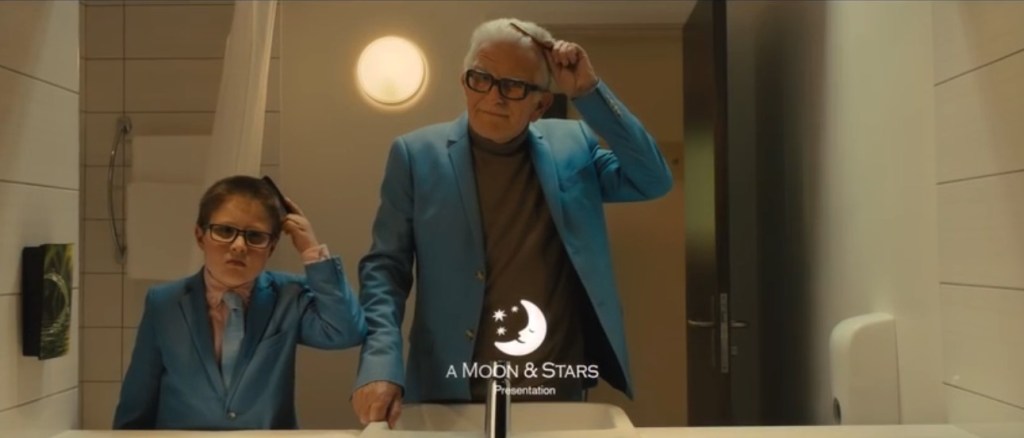
Everything about this advert screams Wes Anderson – and deliberately so. Shot by renowned British director Ben Wheatley, the ad uses multiple Anderson tropes from the opening frame, in which two characters are shot front-on looking directly into a mirror. Those two opening characters – an old man and a young child dressed in the same coloured jacket – are a clear reference to Ben Stiller’s character Chas and his ‘mini me’ children in The Royal Tenenbaums, who all dress in the same coloured tracksuits. Even the on-screen typeface is the same as that used frequently in Anderson films. All in all it’s a precisely observed homage – but one where the viewer is still left wondering whether it’s imitation for imitation’s sake.
 JADED
JADED 
Leave a comment